|
PARADISE ON EARTH – YELLOW PATCH...continued |
|
BACK to Masala Home Page |
|
BACK to Masala Cruise Log |
|
Leanne heated up a delicious pot of leftover beans, but we both had trouble eating them as we were not feeling the best by this stage.
During the night a large and very (genetically) stupid bird, a Brown Booby, kept trying to land on our mast, even though it was being whipped around by the seas. If I wasn’t so worried about the idiotic thing breaking off our VHF antenna or wind indicator, I would have had a good laugh at its clumsy antics. This species is the living epitome of the expression “Bird-brain”.
I like to hand steer the boat at night if I can, for three reasons. It is good practice, it saves a few amp hours from the battery bank by having the autopilot turned off, and it helps pass the three hours of a watch. Sometimes it can be very difficult, particularly on inky black nights when it is next to impossible to orient yourself and find a fixed reference to steer by. Not this night. I had the remarkable experience of steering straight up the “Silver Brick Road”, the shimmering glint of the full moon on the sea. Totally captivating. |
|
We did not expect to arrive off Yellow Patch until late morning the next day, but the wind and waves propelled us along at up to 8.8 knots so we arrived off Cape Capricorn and lined up for the approach three hours ahead of schedule. |
|
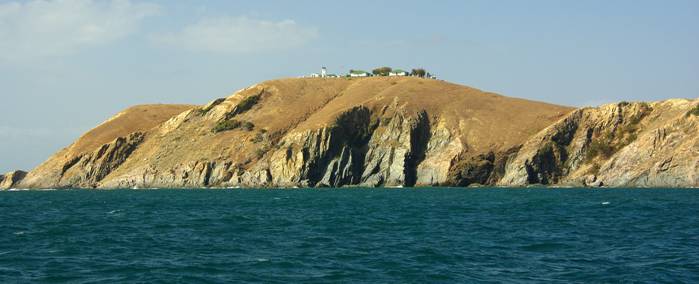
Above: Cape Capricorn and its lighthouse buildings, seen from the sea. Named after the Tropic of Capricorn, which passes almost right through it. |
|
The entrance to the anchorage is over a vast, shallow, open sand bar. There are no navigational markers. Most monohull yachts bypass the area due to these factors. Fortunately we were given waypoints by friends Paul and Sjany off the 46’ Mumby catamaran, Skellum. The waypoints, combined with our increasing confidence in operating Masala in shallower waters, prompted us to give it a go. |
|
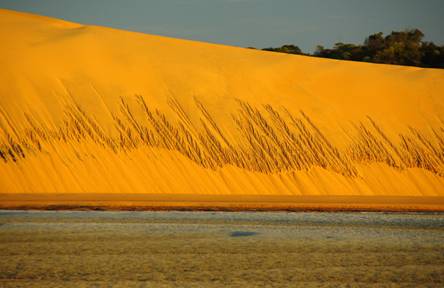
The attraction is palpable as you start the run across the bar. A golden orange sand blow of massive proportions radiates in the morning sun. Its steep, mobile face drops straight into the calm waters of the estuary. A rocky headland covered in trees and shrubs arcs around to provide shelter. It harbours the only water deep enough for Masala to remain afloat at anchor as the outgoing tide drops the water level by 3.5 metres. |
|
Right: the spectacular sand blow from which Yellow Patch gets its name. To our minds it would be better named Orange Patch. |