Masala—Construction—3 |




|
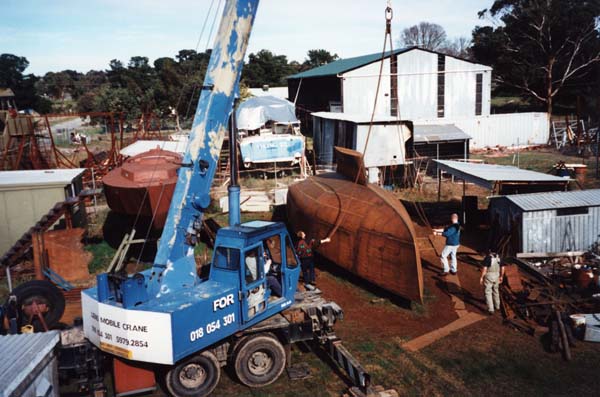
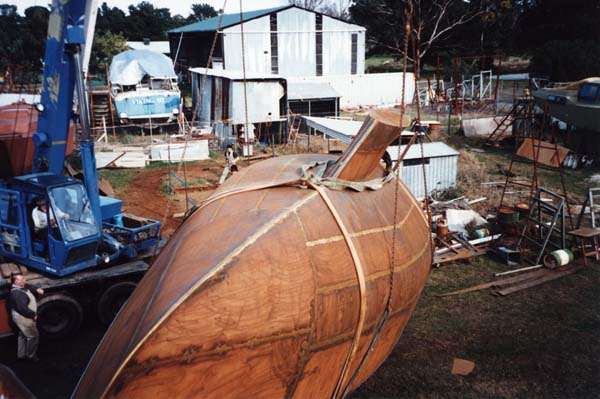
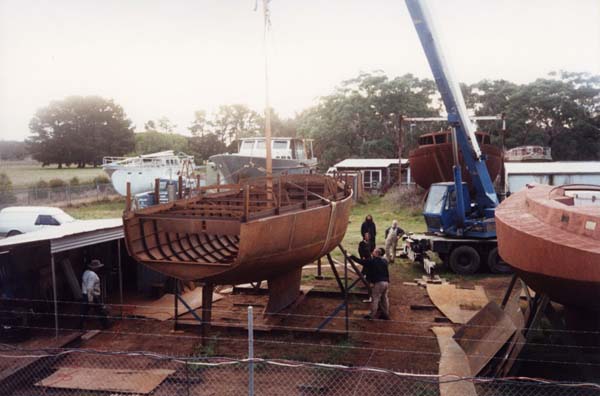
10, 11, 12. TURNING OVER The hull is being turned over for work to continue on the inside. The frames and stringers are still only tack welded to the plates at this stage because during the turning over process there can be some movement. It is better that the frames and stringers break their welds and move fractionally if necessary. This is possible if they are tack welded but not if they are fully welded. In that case the plates would be stretched by the forces instead, leading to an undesirable “starved cow” appearance. |
|
Left: the construction jig can still be seen in place. It helps strengthen the hull during the turning over process. A steel plate has been laid under the keel. This will form the bottom of a steel bath that will be welded around the lower section of the keel. The bath will be filled with water to stop the plates from warping when the molten lead ballast is poured into the keel. There are spacers under the keel so that the bottom plate can be accessed for sand blasting and painting. |
|
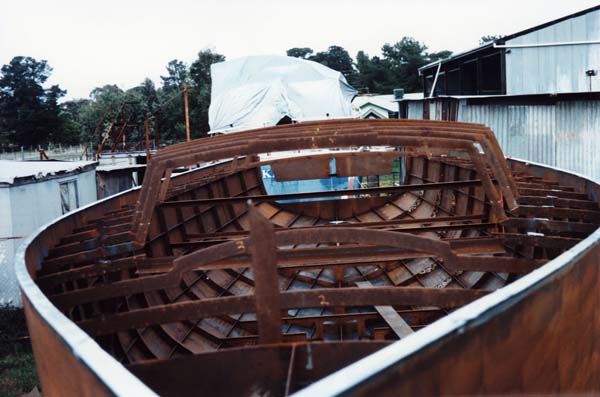
13. DECK AND CABIN FRAMES—1 Right: the jig has been cut away and the deck and cabin frames welded in place. The bulwarks show the capping of stainless steel that was welded on before turning. This is not part of the plans, but is typical of the quality of this vessel—high wear areas throughout have been capped in stainless so that if the paint is chipped it will not rust. The outer edge of the stainless strips will be used as a fairing edge when the hull is faired with epoxy filler. |
|
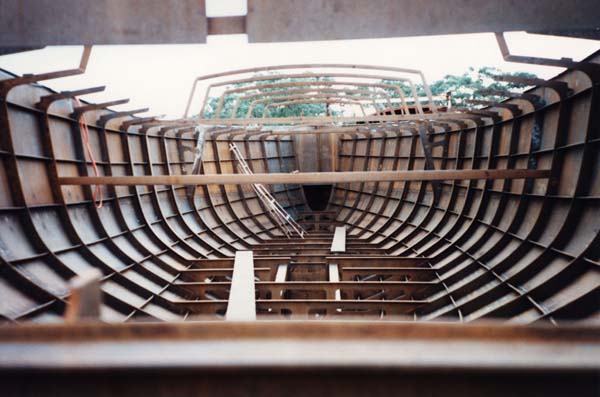
14. DECK AND CABIN FRAMES—2 Below: deck and cabin frames being welded in place. The strength, symmetry and abstract beauty of the hull structure is clearly evident. |