Masala—Construction—6 |




|
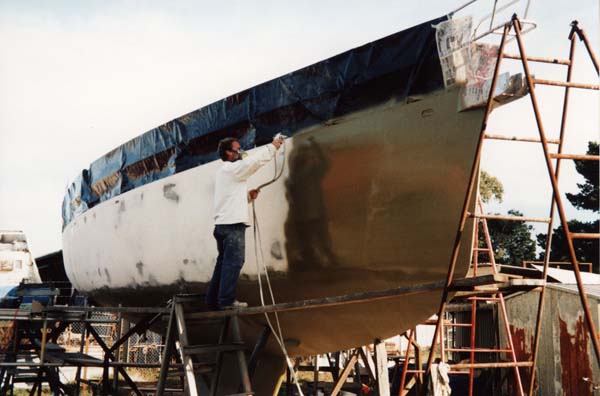
28. SECOND PRIMER COAT A coat of pure epoxy with Q-cells has been sprayed over the fairing compound. This is an extremely hard material. A black guide coat was then sprayed over the epoxy. The epoxy was then sanded back, the black guide coat indicating which areas had been completed and which areas not. A second coat of Sigma EP Universal Primer is now being sprayed over the sanded pure epoxy and fairing compound layers. |
|
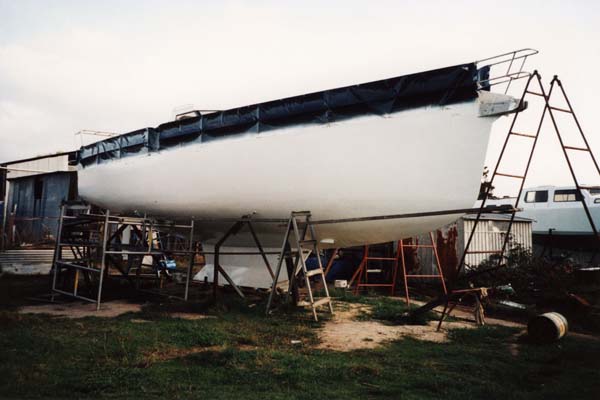
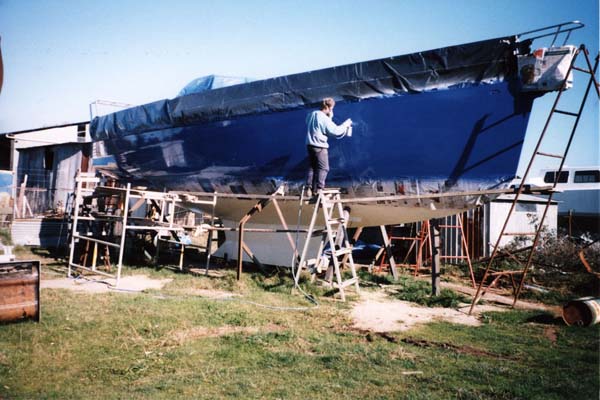
29, 30. UNDERCOAT AND TOPCOATS. Above, left: the whole hull had been sprayed with two-pack epoxy Epinamel High Build Primer Undercoat. Its purpose is to increase the dry film thickness of the paint and therefore improve the corrosion protection. Above, right: the topcoat is being applied to the hull above the waterline. It is blue Paracryl IFC. The thickness of the coat is built up from three thinner layers – spraying is started at one end of the boat, then when the end is reached it is started again from the beginning, and so on. |
|
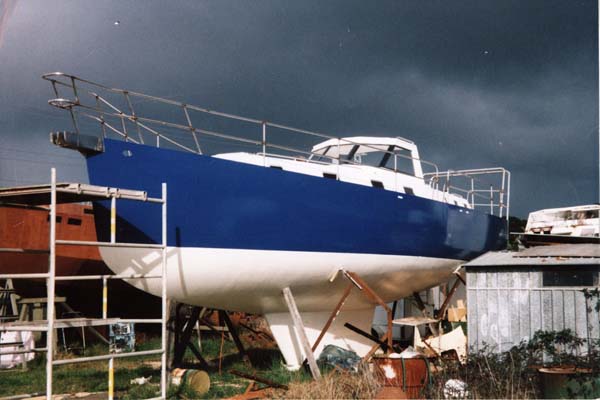
31. THE FINISHED JOB—1 Below: all done above the waterline. |
|
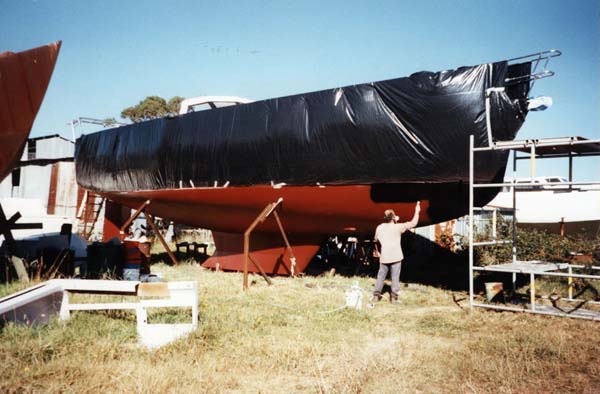
32. THE FINISHED JOB—2 Right: painting below the waterline continues. First, Sigma EP Tiecoat (grey) has been applied. This two-pack epoxy is designed to ensure adequate adhesion of the antifouling, as well as being part of the anti-corrosive system. Next, a coat of Sigmaplane Ecol Antifouling (red) was applied. This is a slow polishing, long life, hard antifoul. In the photo, the final coats to the specified thickness of Sigmaplane Ecol HA120Antifouling (black) are being applied. This antifoul is a fast polishing, long life, soft antifoul. |